Introduction
When toddlers feel overwhelmed, the world can feel loud, busy and confusing. A calm corner offers a gentle, supportive space where toddlers can pause, regulate and feel safe.
This isn’t a time-out or a consequence — it’s a comfort-based space designed to help overstimulated toddlers reset in their own time.
A calm corner can be simple, flexible and easily adapted to your home.
What Is a Calm Corner?
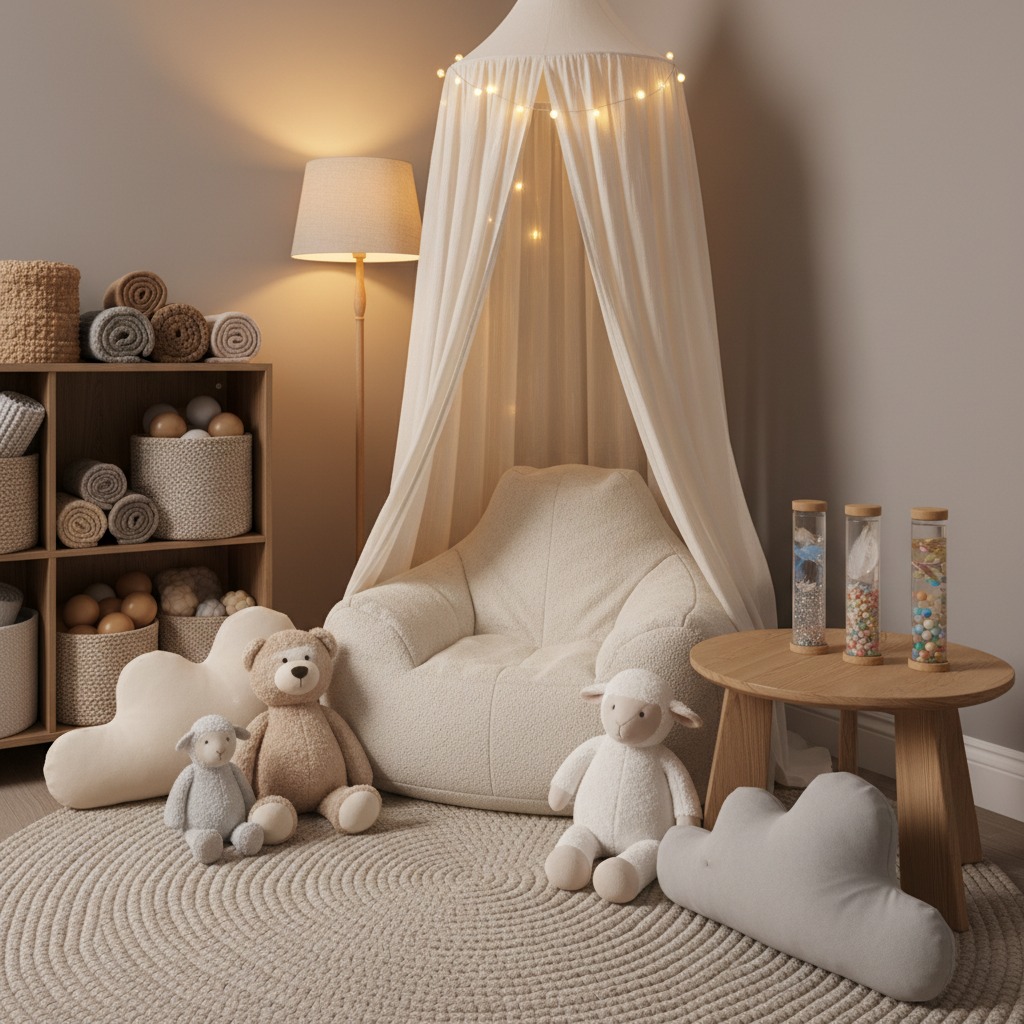
A calm corner is a small, quiet area set up to reduce sensory input and support emotional regulation.
It gives toddlers a predictable place to retreat when they feel overstimulated, tired or emotionally flooded.
The goal is not to “fix” emotions, but to support them.
Why Calm Corners Help Overstimulated Toddlers
Many toddlers experience sensory overload from noise, transitions, social interaction or busy environments. A calm corner can help by:
- Reducing sensory stimulation
- Providing a sense of safety and predictability
- Supporting emotional regulation
- Encouraging independence over time
With regular use, toddlers may begin to choose this space themselves when they need a break.
What to Include in a Calm Corner
Soft seating
Cushions, a beanbag, floor mattress or soft rug help create physical comfort and gentle pressure, which can be very regulating.
Sensory-friendly toys
Choose calm, quiet items such as:
- Soft toys
- Textured fabrics
- Wooden puzzles
- Sensory bottles
Avoid flashing lights or loud sounds.
Visual calm
Neutral colours, soft lighting or a small lamp can help reduce visual overload. Keeping the space uncluttered makes it feel safer and calmer.
Comfort items
Familiar objects like a favourite blanket or cuddly toy can provide reassurance and emotional security.
How to Introduce a Calm Corner
Introduce the calm corner during a relaxed moment, not during a meltdown.
Sit with your toddler and explore the space together so it feels positive and safe.
Let your child lead — some toddlers will use it straight away, others may need time.
How to Use a Calm Corner Day to Day
Calm corners work best when used proactively:
- Before transitions
- After busy outings
- As part of a daily routine
They should never be used as punishment or forced.
If your toddler benefits from quiet spaces, you may also find these calming sensory activities for overstimulated toddlers helpful at home.
Final Thoughts
Every toddler’s sensory needs are different, and your calm corner can evolve over time. Keeping the space flexible and pressure-free helps ensure it remains a source of comfort and regulation.
This post may contain affiliate links. As an Amazon Associate, I may earn from qualifying purchases at no extra cost to you.
Leave a Reply